

The Indian village fighting fluoride poisoning with vitamins and clean water
03 noviembre 2015For years the people of Tapatjuri, a remote village in northeast India, thought evil spirits were tormenting them. It was the only way they could explain why hundreds of people in their community were crippled, with bones bent so badly out of shape that many could not wash, eat, or leave their houses without help.
The disease struck all three of Taramiya Uddin’s children, starting in the late 1990s when his eldest son was a small boy. One day a roaming witchdoctor known as a kabiraj arrived offering to cure his son.
The kabiraj chanted an incantation into a bottle of mustard oil and told Taramiya to rub it on his son’s legs, which splayed outwards from the knees, making walking painful. The cure didn’t work, but witchdoctors continued to arrive in the village with their elixirs, charging desperate parents more than a thousand rupees, roughly £10 – several times the average daily income of £1.35.
A major public health problem
The problem was the water, contaminated with naturally occurring fluoride. Most people in the village in Assam state, like millions across India, had been drinking from pumps that drew water from deep below ground, where it had absorbed dangerous levels of the chemical from fluoride-bearing rocks.
Skeletal fluorosis is a major public health problem in at least 25 countries, butIndia and China are believed to be the worst-affected, with tens of millions suffering from either bent bones, or less severe dental and non-skeletal fluorosis. In the UK the chemical is associated with healthy teeth, and is even added to drinking water by some local councils. But when it accumulates in the body at excessive levels it begins to mottle teeth and calcify joints.
The World Health Organisation recommends an upper limit of 1.5 parts per million of fluoride in drinking water. In Tapatjuri, people have been drinking from wells containing up to 15 parts per million.
Now Tapatjuri and two nearby villages are the site of a pioneering project to reverse the disfiguring effects of fluorosis in children. A team led by Dr AB Paul, former chief engineer at the state’s public health and engineering department, is treating 20 patients between the ages of four and 13 using simple nutrition tablets and fresh water.
The treatment, which includes calcium and vitamins C and D, can alleviate symptoms in adults, but the project targets children because its supporters believe the fact that their bones are still growing makes it is possible to cure them entirely.
Taramiya’s eldest son, who was “treated” by the witchdoctor, is now 18 and has permanently misshapen bones, but his eight-year-old brother Farhan appears almost completely cured. In 2012 his knees knocked together and he couldn’t walk to school on his own. Now his legs are straight, and he can run and climb trees, though his father says his muscles are still weak. He has improved more than the 20 children on the new programme because he has been receiving treatment for longer. His parents began following Dr Paul’s advice more than two years ago.
Dr Paul and his team have been working in the village since 1999 to tackle superstition and encourage families to change their diets and drink safe water. They have also convinced authorities to supply the village tract with fluorosis-free water, and the contaminated wells around Tapatjuri are now marked with red crosses.
Taramiya laughs, perhaps a little embarrassed, when he recalls handing his money over for magical cures. “Yes, I believed in it” he says. “Overall I spent 25,000 rupees [about £250] on the kabiraj. He is a fraud.”
The World Health Organisation recommends an upper limit of 1.5 parts per million of fluoride in drinking water. In Tapatjuri, people have been drinking from wells containing up to 15 parts per million.
Now Tapatjuri and two nearby villages are the site of a pioneering project to reverse the disfiguring effects of fluorosis in children. A team led by Dr AB Paul, former chief engineer at the state’s public health and engineering department, is treating 20 patients between the ages of four and 13 using simple nutrition tablets and fresh water.
The treatment, which includes calcium and vitamins C and D, can alleviate symptoms in adults, but the project targets children because its supporters believe the fact that their bones are still growing makes it is possible to cure them entirely.
Taramiya’s eldest son, who was “treated” by the witchdoctor, is now 18 and has permanently misshapen bones, but his eight-year-old brother Farhan appears almost completely cured. In 2012 his knees knocked together and he couldn’t walk to school on his own. Now his legs are straight, and he can run and climb trees, though his father says his muscles are still weak. He has improved more than the 20 children on the new programme because he has been receiving treatment for longer. His parents began following Dr Paul’s advice more than two years ago.
Dr Paul and his team have been working in the village since 1999 to tackle superstition and encourage families to change their diets and drink safe water. They have also convinced authorities to supply the village tract with fluorosis-free water, and the contaminated wells around Tapatjuri are now marked with red crosses.
Taramiya laughs, perhaps a little embarrassed, when he recalls handing his money over for magical cures. “Yes, I believed in it” he says. “Overall I spent 25,000 rupees [about £250] on the kabiraj. He is a fraud.”
When the water was finally tested in 2012, four of the dozen wells that were sunk were found to contain between three and five milligrams of fluoride per litre, far above the maximum level of one milligram recommended by the Bureau of Indian Standards.
Officials at Unicef, which was part of the push to dig wells during the UN’s international water decade of the 1980s, have previously admitted that a focus on installing large numbers of pumps meant quality was overlooked. It has since led de-fluoridation programmes and other water safety efforts across India.
Caroline den Dulk, the agency’s spokesperson in Delhi, said it would be “extremely difficult” to trace records for Tapatjuri from 2002, when Unicef did not have an office in Assam state. She added that Unicef works with governments to ensure quality issues are addressed before projects are commissioned.
“Once the project is completed, it is officially handed over to the concerned community members and the quality assurance of the water source is the responsibility of the government,” she said.
Despite the hiccup with the ring wells, efforts to provide safe drinking water in Tapatjuri have no doubt improved the lives of the residents. Water shortages, however, are an everyday problem.
Halima Begum, the mother of three children affected by fluorosis contamination, shouts at Salawi as he approachs their house on his rounds. He is in charge of rationing water between several villages, making him unpopular with some residents.
Halima’s frustration is understandable. Her three sons have been disabled by contaminated water, and she and her husband suffer from non-skeletal fluorosis, a painful condition that makes their joints and bones ache.
While the number of children in the Tapatjuri programme is small compared to the hundreds suffering in the region, Dr Paul hopes it can be a model for other communities. Curing the disease should also help banish the harmful superstitions that have grown around it. “That’s our aim,” said Dr Paul. “Establish a success story, and show it to the people.”
Join our community of development professionals and humanitarians. Follow@GuardianGDP on Twitter, and have your say on issues around water in development using #H2Oideas.
29 de octubre del 2015
Fuente: The Guardian
Artículos relacionados
Otras Publicaciones
 Nacional
Ciudad de México–Cuestionan el uso de agua tratada para transportar desechos en la red hidráulica (Amexi)
03 abril 2026 Nacional
México–Establecen multas por desperdiciar agua durante el Sábado de Gloria (SinEmbargo)
03 abril 2026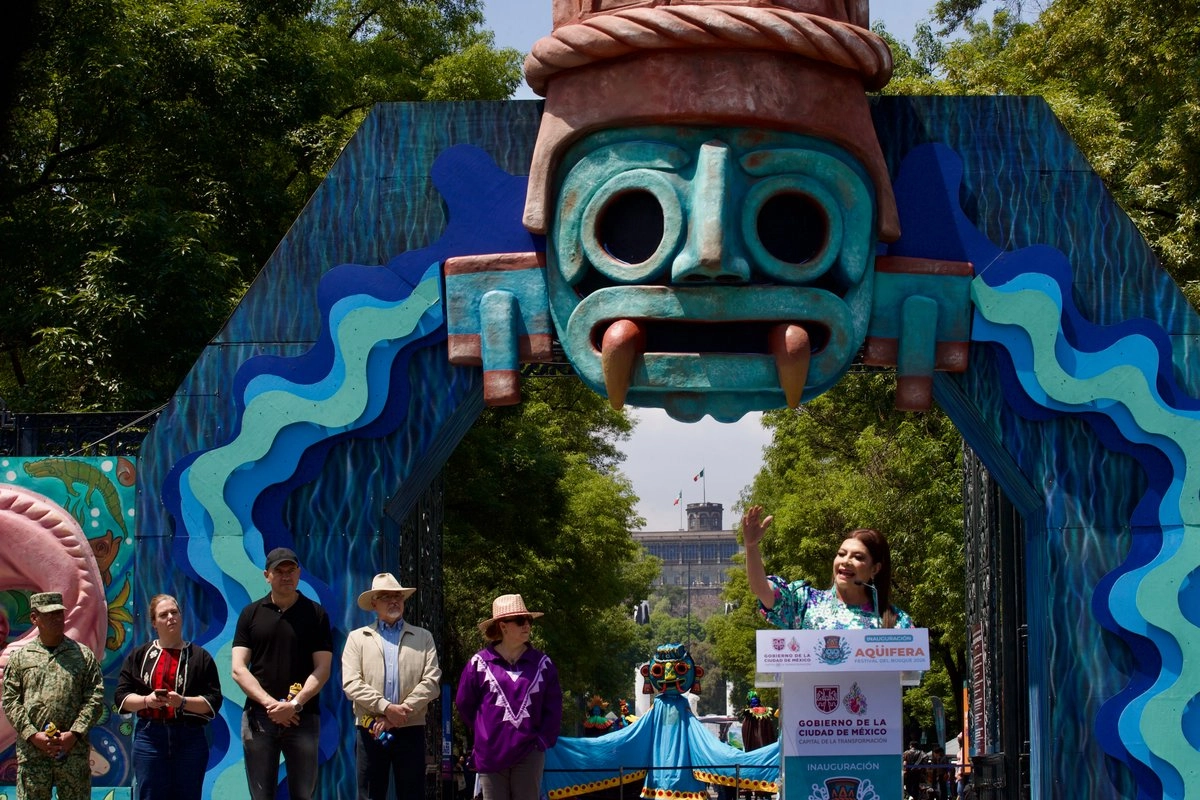 Uncategorized
Ciudad de México–Promueven el cuidado del agua en el Festival del Bosque de Chapultepec 2026 (La Jornada)
03 abril 2026